What is a Laser Resistor Trimming Machine? Why Choose Precision Laser Trimming Technology?
Introduction
In modern precision electronics manufacturing, the demand for ultra-high accuracy and stable electronic components continues to increase. As industries such as automotive electronics, medical devices, communication systems, sensors, and industrial control equipment develop rapidly, traditional resistor adjustment technologies can no longer meet modern production requirements.
Today, the laser resistor trimming machine has become one of the most important solutions for high-precision resistor calibration and electronic component adjustment. Compared with manual trimming and traditional mechanical methods, laser trimming technology offers higher accuracy, better efficiency, non-contact processing, and superior automation capability.
As global manufacturers search for intelligent production solutions, keywords such as:
- resistor trimming machine
- laser trimming machine
- resistor laser trimming
- precision resistor trimming
- laser trimming system
- resistor calibration machine
are becoming increasingly popular in industrial search markets.
This article explains how laser resistor trimming technology works, its advantages, application industries, and why laser trimming systems are becoming essential equipment for precision electronics manufacturing in 2026.
What is a Laser Resistor Trimming Machine?
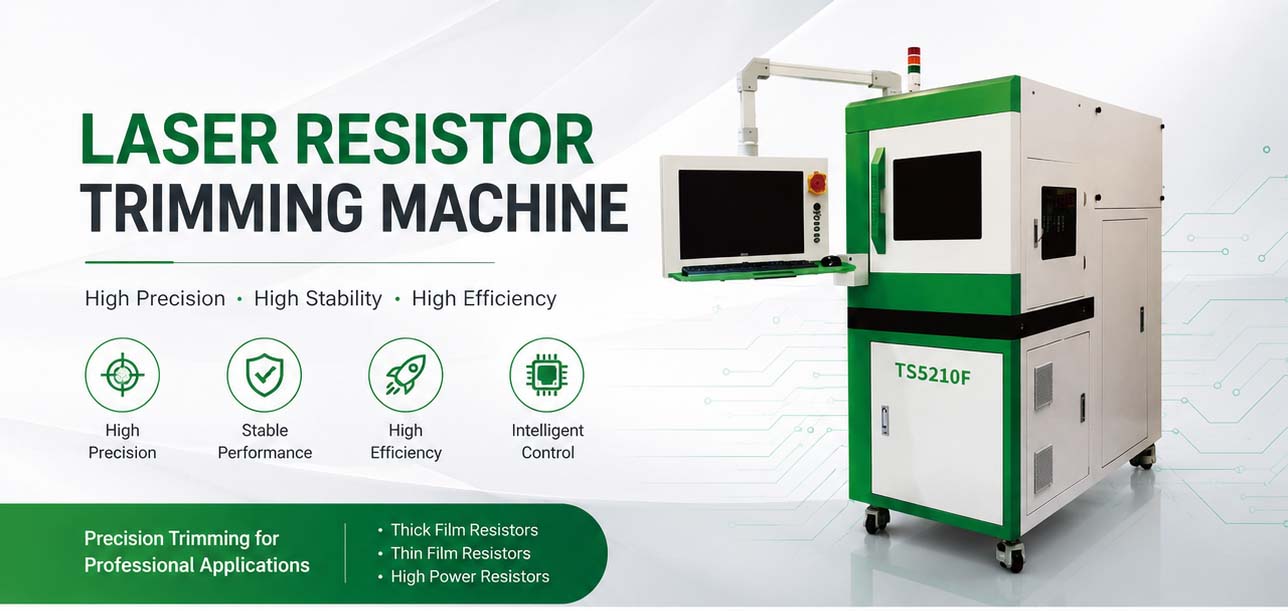
A laser resistor trimming machine is a high-precision laser processing system designed to adjust resistor values by selectively removing resistive material using a focused laser beam.
During the trimming process, the system continuously measures the electrical resistance in real time. Once the target resistance value is reached, the laser automatically stops trimming to ensure high accuracy and stability.
Compared with traditional resistor adjustment methods, modern laser trimming systems offer:
- Higher precision
- Faster production speed
- Better product consistency
- Fully automated operation
- Minimal heat impact
- Non-contact processing
A complete resistor trimming machine usually integrates:
- Fiber laser or UV laser source
- High-speed galvanometer scanner
- CCD vision positioning system
- Precision resistance measurement module
- Motion control platform
- Intelligent trimming software
These technologies work together to achieve extremely accurate resistor calibration for modern electronics manufacturing.
How Does Resistor Laser Trimming Work?
The working principle of resistor laser trimming is based on changing the resistance path by precisely removing part of the resistive film.
The trimming system first measures the initial resistance value of the component. Then, the laser beam trims the resistor according to a programmed trimming pattern.
Common trimming patterns include:
- L-cut
- Serpentine cut
- U-cut
- Square cut
During processing, the resistance value is monitored continuously in real time.
Once the required resistance tolerance is achieved, the laser stops immediately.
This closed-loop control process allows precision resistor trimming systems to achieve extremely tight tolerance control.
Why Choose Laser Trimming Technology?
1. Ultra-High Precision
One of the biggest advantages of a laser resistor trimming machine is ultra-high trimming accuracy.
Modern laser trimming systems can achieve resistance tolerances as precise as:
- ±1%
- ±0.5%
- ±0.1%
- Even higher precision for advanced applications
This level of precision is critical for:
- Medical electronics
- Aerospace systems
- Automotive sensors
- Communication equipment
- High-frequency circuits
Traditional mechanical trimming methods cannot achieve the same consistency and accuracy.
2. Non-Contact Processing
Laser trimming is a completely non-contact process.
Unlike traditional mechanical cutting methods, resistor laser trimming does not physically touch the component surface.
This greatly reduces:
- Mechanical stress
- Surface damage
- Material contamination
- Component deformation
Non-contact processing is especially important for fragile electronic components and thin-film resistors.
3. High Production Efficiency
Modern laser trimming machines support high-speed automated processing.
After integrating:
- Automatic loading systems
- Vision positioning
- High-speed galvo scanners
- Online resistance testing
the trimming system can achieve fully automated continuous production.
This significantly improves manufacturing efficiency while reducing labor costs.
4. Excellent Stability and Repeatability
Precision electronics manufacturing requires stable and repeatable production quality.
A professional resistor trimming machine ensures:
- Stable trimming results
- Low processing error
- Consistent product quality
- Reduced defect rate
This is one of the key reasons why laser trimming technology is widely used in mass production environments.
Applications of Laser Resistor Trimming Machines
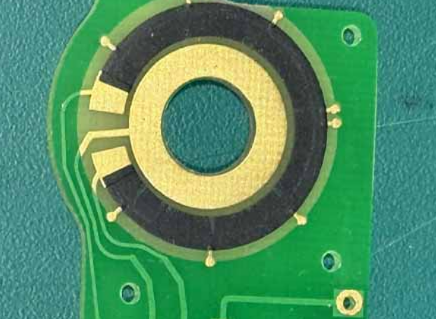
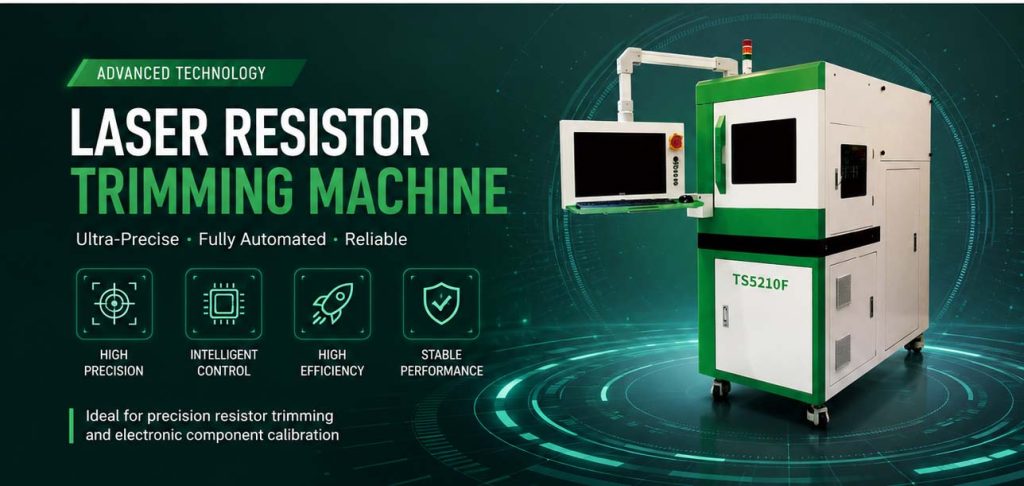
Thick Film Resistor Trimming
Laser trimming systems are widely used for thick film resistor adjustment in hybrid circuits and industrial electronics.
Thin Film Resistor Trimming
Thin film resistors require extremely high precision.
Laser resistor trimming technology provides excellent control for high-end electronic applications.
Sensor Calibration
Modern sensors often require precision resistor adjustment to ensure stable signal output.
Laser trimming systems are commonly used for:
- Pressure sensors
- Temperature sensors
- Current sensors
- Automotive sensors
Automotive Electronics
The automotive industry requires highly reliable electronic components.
Laser trimming machines are widely used in:
- ECU modules
- Battery management systems
- ADAS systems
- Automotive communication modules
Medical Electronics
Medical devices require ultra-stable and highly accurate electronic circuits.
Precision resistor trimming ensures reliable performance for:
- Monitoring equipment
- Medical sensors
- Diagnostic devices
- Implantable electronics
Fiber Laser vs UV Laser for Resistor Trimming
Fiber Laser Trimming
Fiber lasers offer:
- High efficiency
- Lower maintenance
- Long service life
- Fast processing speed
Suitable for:
- Thick film resistors
- Metal film trimming
- Industrial applications
UV Laser Trimming
UV lasers provide:
- Smaller heat-affected zone
- Higher precision
- Better fine processing capability
Suitable for:
- Thin film resistors
- Semiconductor applications
- Microelectronic devices
- Precision circuits
Choosing the correct laser source depends on material type and processing requirements.
Advantages of Vision Positioning in Laser Trimming
Modern resistor trimming machines increasingly integrate CCD vision systems.
Vision positioning technology helps:
- Automatically identify workpiece position
- Correct material deviation
- Improve trimming accuracy
- Reduce alignment time
- Support batch production automation
Combined with intelligent software algorithms, vision-guided laser trimming systems provide much higher processing consistency.
Future Trends of Laser Trimming Technology in 2026
As smart manufacturing continues to develop, laser trimming systems are becoming more intelligent and automated.
Future trends include:
- AI-assisted trimming algorithms
- Automatic parameter optimization
- High-speed dynamic trimming
- Online quality monitoring
- MES production integration
- Smart factory automation
Laser resistor trimming technology will continue becoming one of the core technologies in precision electronics manufacturing.
Conclusion
With the rapid growth of high-end electronics manufacturing, the demand for precision resistor adjustment continues to increase worldwide.
Compared with traditional trimming methods, laser resistor trimming machines offer:
- Higher accuracy
- Better efficiency
- Superior stability
- Lower maintenance
- Fully automated production capability
Whether for automotive electronics, medical devices, industrial control systems, or communication equipment, laser trimming technology provides reliable and high-precision manufacturing solutions.
As Industry 4.0 and intelligent manufacturing continue to expand, precision laser trimming systems will play an increasingly important role in future electronics production.
Contact Us
We provide various industrial laser solutions for global customers, including:
- Laser Resistor Trimming Machines
- Fiber Laser Systems
- UV Laser Systems
- Picosecond Lasers
- Laser Marking Machines
- Galvo Scanners
- Laser Controllers
- Vision Positioning Systems
- Laser Welding Equipment
- Customized Laser Automation Solutions
If you are looking for professional resistor trimming solutions and precision laser systems, feel free to contact us for technical support and customized industrial laser equipment.