High-Accuracy Resistor Trimming Solutions for Electronics Manufacturing
As electronic products continue to move toward higher precision, miniaturization, and stability, resistor trimming technology has become an essential process in modern electronics manufacturing. From thick film and thin film resistors to hybrid circuits and sensor components, precise resistance adjustment directly affects product performance, reliability, and consistency.
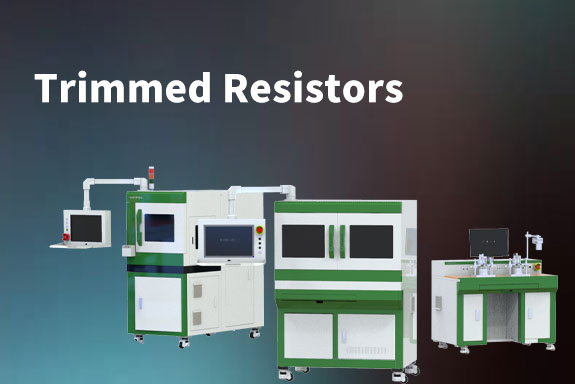
A laser trimming machine (also known as a resistor trimming machine) provides an efficient and highly accurate solution for fine resistance tuning, meeting the stringent requirements of today’s electronic and semiconductor industries.
What Is a Laser Trimming Machine?
A laser trimming machine is a precision system designed to adjust resistance values by selectively removing resistor material using a laser beam. By controlling the trimming path, depth, and energy, the resistance can be tuned to the target value with extremely high accuracy.
Compared with traditional mechanical or chemical trimming methods, laser resistor trimming offers non-contact processing, higher precision, and better repeatability, making it the preferred solution for high-end electronic components.
Key Advantages of Laser Resistor Trimming Equipment
1. High Trimming Accuracy and Stability
Laser trimming machines can achieve micron-level trimming precision, allowing resistance tolerance to be controlled within very tight ranges. This is critical for applications that require stable electrical performance over long operating periods.
2. Non-Contact and Low-Stress Processing
Because the laser trimming process is non-contact, it introduces no mechanical stress to the component. This significantly reduces the risk of cracking, delamination, or damage to sensitive substrates.
3. Excellent Consistency for Mass Production
With automated control systems and real-time resistance measurement, laser trimming equipment ensures high consistency across large production batches, improving yield and reducing rework costs.
4. Flexible Trimming Patterns
Laser trimming machines support multiple trimming strategies, such as:
L-cut
Serpentine cut
Plunge cut
Custom trimming paths
This flexibility allows the system to adapt to different resistor materials, geometries, and performance requirements.
Typical Applications of Laser Trimming Machines
Laser resistor trimming technology is widely used across multiple industries, including:
Thick film and thin film resistor manufacturing
Hybrid integrated circuits (HIC)
Precision sensors and measurement devices
Automotive electronics
Medical electronics
Power management modules
Semiconductor packaging and testing
In these applications, precise resistance values are essential for signal accuracy, temperature compensation, and long-term reliability.
Materials Suitable for Laser Trimming
A modern laser trimming machine can process a wide range of resistor materials, including:
Ruthenium-based thick film resistors
Thin film metal resistors
Cermet resistors
Conductive ceramic substrates
Glass and ceramic-based resistor layers
Advanced laser control allows clean material removal with minimal thermal impact, preserving the integrity of the surrounding substrate.
Why Laser Trimming Is Essential for High-End Electronics
As electronic circuits become more complex, even small resistance deviations can lead to signal distortion, thermal drift, or functional failure. Laser trimming enables precise post-fabrication adjustment, ensuring each component meets its exact design specification.
In addition, laser trimming supports:
Faster production cycles
Lower scrap rates
Improved product reliability
Better overall cost efficiency
These advantages make laser trimming machines a core piece of equipment in precision electronics manufacturing lines.
Choosing the Right Laser Trimming Machine
When selecting a laser trimming machine, manufacturers typically consider:
Trimming accuracy and repeatability
Laser type and wavelength
Measurement and feedback system
Automation level
Software control and data logging
Compatibility with existing production lines
A well-designed trimming system not only improves product quality but also enhances production efficiency and scalability.
Conclusion
A laser trimming machine is a critical tool for achieving high-precision resistor adjustment in modern electronics manufacturing. With its non-contact processing, excellent accuracy, and strong adaptability, laser trimming technology continues to play a vital role in producing reliable, high-performance electronic components.
For manufacturers seeking stable quality, high yield, and advanced process control, laser resistor trimming equipment provides a proven and future-ready solution.