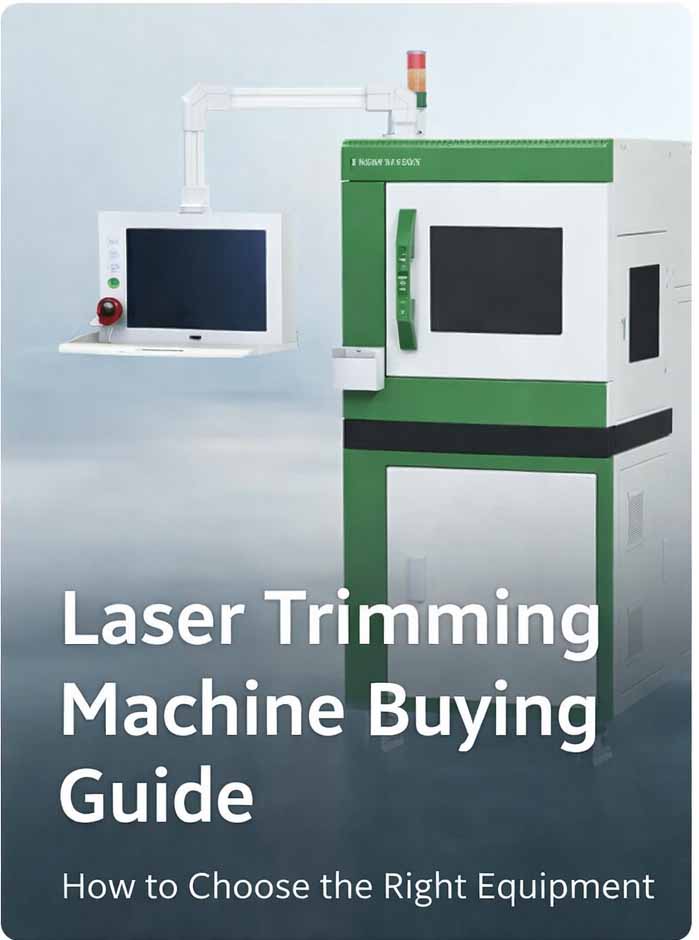
What Is a Laser Trimming Machine?
A laser trimming machine is a high-precision system used to adjust resistance values by removing small portions of conductive material from resistors, circuits, or electronic components. In precision manufacturing, laser trimming ensures that each component reaches the exact electrical specification required for stable performance.
Compared with traditional mechanical adjustment methods, laser trimming offers non-contact processing, higher repeatability, and better long-term reliability. It is widely used in resistor production, hybrid circuits, sensors, and electronic modules.
Why Laser Trimming Is Important in Precision Manufacturing
Modern electronic products require extremely accurate resistance control. Even small deviations may affect product stability, especially in automotive electronics, medical devices, and industrial sensors.
A laser trimming machine helps manufacturers:
Improve resistance accuracy
Reduce production errors
Increase product consistency
Support automated production lines
Because the trimming process is controlled by software, manufacturers can achieve stable results even in large-volume production.
Main Applications of Laser Trimming Machines
Laser trimming systems are widely used in several industrial fields:
Thick Film Resistor Trimming
Thick film resistors often require precise adjustment after printing and firing. Laser trimming helps achieve exact resistance tolerance.
Thin Film Circuit Adjustment
Thin film circuits demand extremely high precision, making laser trimming the preferred solution.
Sensor Manufacturing
Many sensors require resistance calibration before final assembly.
Hybrid Circuit Production
Hybrid electronic modules often include precision trimming processes during manufacturing.
Common Laser Trimming Patterns
Different trimming patterns are used depending on the target resistance value and material characteristics.
L-Cut
Suitable for standard resistor adjustment.
Plunge Cut
Used for simple resistance correction.
Serpentine Cut
Ideal for high precision and fine adjustment.
The trimming path directly affects trimming accuracy and long-term stability.
How to Choose the Right Laser Trimming Machine
When selecting a laser trimming machine, manufacturers should consider:
Laser Source
Fiber laser is suitable for most resistor trimming applications, while UV laser may be required for sensitive materials.
Accuracy
High precision systems can achieve micron-level adjustment.
Automation Level
Automatic systems improve production efficiency and reduce labor cost.
Software Compatibility
Advanced software allows real-time monitoring and resistance control.
Advantages of Automatic Laser Trimming Systems
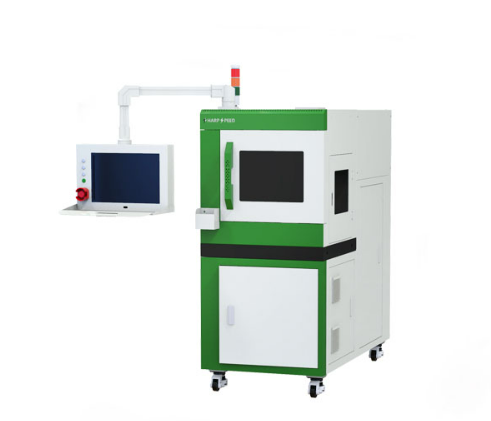
Automatic laser trimming machines are becoming increasingly popular because they offer:
Faster production speed
Stable batch consistency
Reduced human error
Easy integration into automated lines
For manufacturers seeking large-scale production, automation significantly improves efficiency.
Future Trends in Laser Trimming Technology
With the growth of smart electronics, laser trimming technology is moving toward:
Higher automation
AI-assisted trimming control
Faster measurement systems
Better compatibility with advanced materials
These developments make laser trimming an essential process in modern electronics manufacturing.
Conclusion
A professional laser trimming machine is a key solution for precision resistor adjustment and high-quality electronic production. Choosing the right system improves product accuracy, efficiency, and long-term manufacturing stability.
For manufacturers working in thick film resistors, hybrid circuits, or sensor production, laser trimming technology provides reliable and scalable advantages.