Laser Trimming in Automotive Electronics: Precision Resistor Trimming Solutions
Introduction
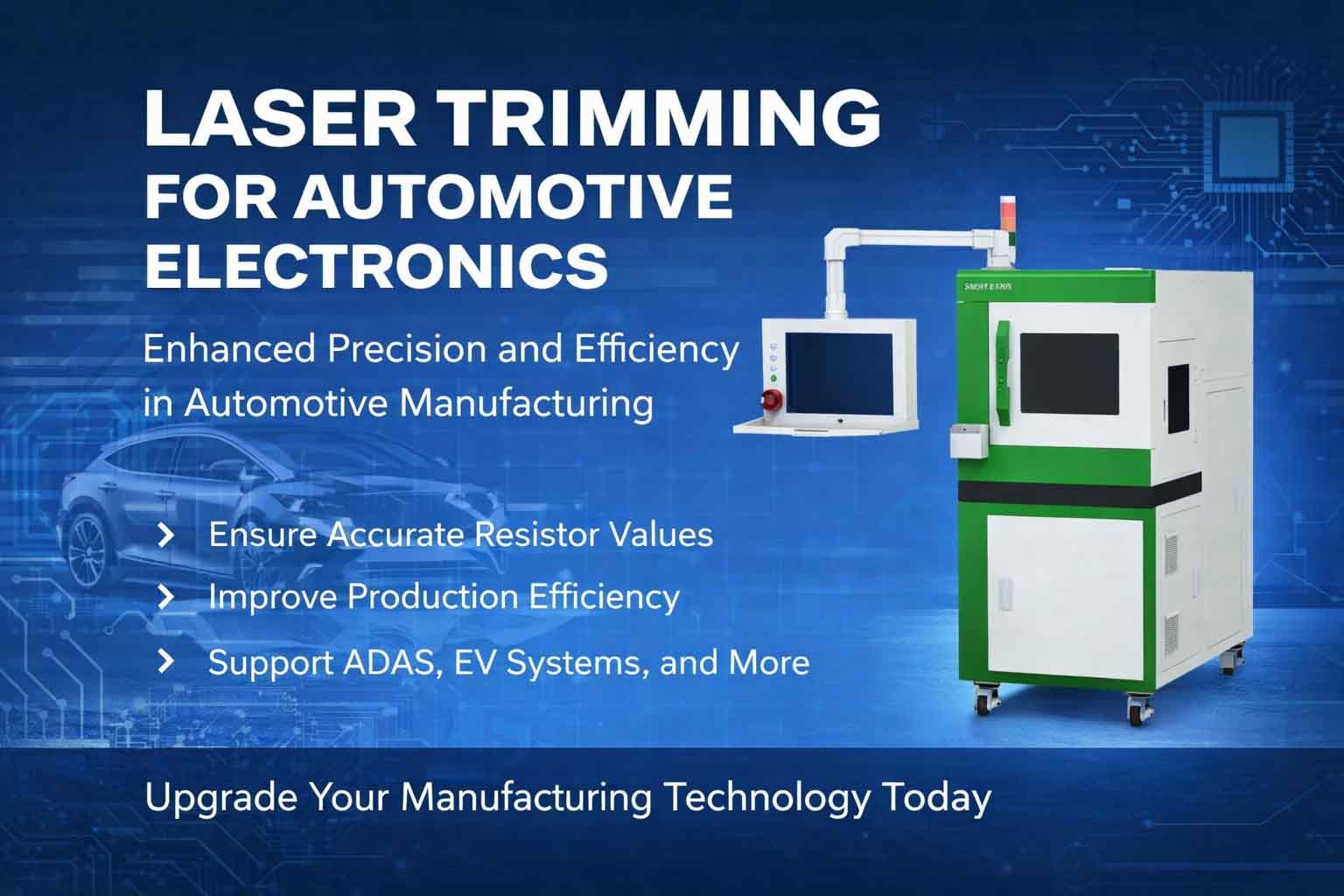
As automotive electronics continue to evolve toward higher precision and reliability, manufacturers are increasingly adopting laser trimming automotive electronics technology to meet strict performance standards.
From advanced driver-assistance systems (ADAS) to electric vehicle (EV) control modules, automotive resistor trimming plays a critical role in ensuring circuit accuracy and long-term stability.
If you are looking to improve product quality and production efficiency, laser trimming is becoming an essential solution in modern automotive manufacturing.
What is Automotive Resistor Trimming?
Automotive resistor trimming is a high-precision process used to adjust resistor values on electronic circuits to meet exact specifications.
Using laser trimming automotive electronics, a focused laser beam removes microscopic portions of resistive material, allowing manufacturers to:
- Achieve ultra-precise resistance values
- Improve circuit performance
- Ensure consistency across large-scale production
- Meet strict automotive quality standards
Unlike manual or mechanical trimming, laser technology provides non-contact, highly repeatable, and automated control.
Why Use Laser Trimming in Automotive Electronics?
1. High Precision and Accuracy
Laser trimming enables micron-level adjustments, ensuring optimal performance in sensitive automotive systems.
2. Non-Contact Process
With laser trimming automotive electronics, there is no physical stress on components, reducing the risk of damage.
3. Improved Reliability
Accurate resistor values directly enhance the reliability of automotive circuits, especially in safety-critical applications.
4. Automation and Efficiency
Modern automotive resistor trimming systems support high-speed, automated production lines, reducing labor costs and increasing output.
5. Cost Optimization
By minimizing scrap rates and rework, laser trimming helps manufacturers reduce overall production costs.
Applications in Automotive Industry
Laser trimming technology is widely used across automotive electronics, including:
- Engine control units (ECUs)
- Battery management systems (BMS) in electric vehicles
- Sensor calibration (temperature, pressure, current sensors)
- Power modules and hybrid circuits
- ADAS and safety systems
With the rapid growth of EVs and smart vehicles, the demand for laser trimming automotive electronics continues to rise.
Laser Trimming vs Traditional Methods
| Method | Precision | Efficiency | Reliability |
|---|---|---|---|
| Mechanical Trimming | Medium | Low | Medium |
| Manual Adjustment | Low | Low | Low |
| Laser Trimming | High | High | High |
Compared to traditional methods, automotive resistor trimming using laser technology offers superior performance and scalability.
Key Features of Laser Trimming Systems
When selecting a system for laser trimming automotive electronics, consider the following features:
- High-resolution vision alignment system
- Real-time resistance monitoring
- Closed-loop control for precision trimming
- Compatible with thick film and thin film resistors
- Integration with automated production lines
A reliable system ensures consistent results and long-term stability in automotive applications.
Why Choose Our Laser Trimming Solutions?
We provide advanced solutions for automotive resistor trimming, designed to meet the highest industry standards:
- High-speed and high-precision trimming
- Stable performance for mass production
- Customizable solutions for automotive applications
- Professional technical support and global service
Our systems are widely used in laser trimming automotive electronics, helping manufacturers improve quality and competitiveness.
Conclusion
As automotive electronics become more complex and performance-driven, automotive resistor trimming is essential for ensuring accuracy and reliability.
By adopting laser trimming automotive electronics, manufacturers can achieve higher precision, better efficiency, and lower production costs.
Contact us today to learn more about our laser trimming solutions and discover how we can support your automotive electronics manufacturing.