How Laser Trimming Improves Product Yield
Introduction
In modern electronics manufacturing, achieving high product consistency and minimizing defects are critical to staying competitive. laser trimming yield improvement has become a key focus for manufacturers aiming to optimize production efficiency. By using advanced laser trimming technology, companies can precisely adjust electrical parameters and significantly enhance overall yield rates.
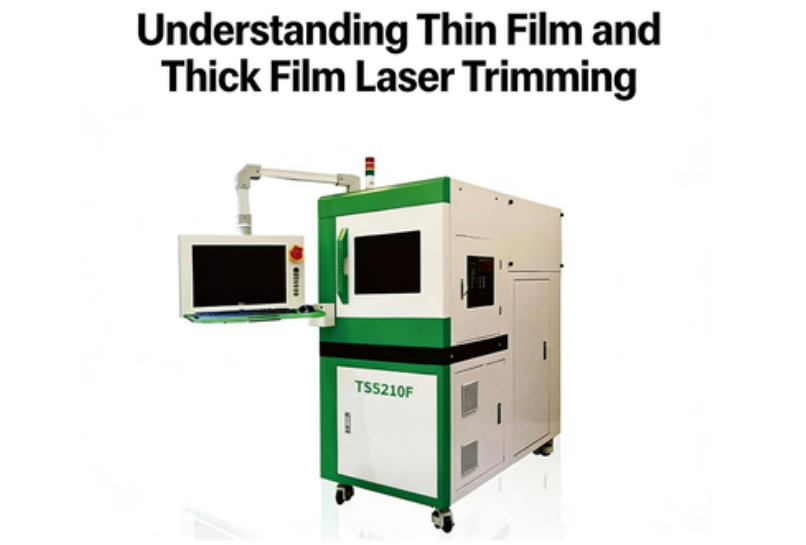
A resistor trimming machine enables real-time correction of component values, ensuring that every product meets strict performance standards before leaving the production line.
What Is Laser Trimming?
Laser trimming is a precision process used to fine-tune electronic components such as resistors, capacitors, and sensors. By removing small amounts of material using a focused laser beam, manufacturers can adjust resistance values to exact specifications.
Unlike traditional manual adjustment methods, laser trimming offers:
- Non-contact processing
- High accuracy and repeatability
- Automated and fast operation
This makes laser trimming yield improvement a reliable solution for high-volume production environments.
How Laser Trimming Improves Product Yield
1. Precise Parameter Control
A resistor trimming machine allows manufacturers to adjust resistance values with micron-level precision. This ensures that components meet exact design requirements, directly contributing to laser trimming yield improvement.
2. Reduction of Defective Products
Instead of discarding out-of-spec components, laser trimming corrects them. This significantly reduces scrap rates and increases usable output.
3. Real-Time Feedback and Adjustment
Modern systems integrate measurement and trimming in a closed-loop process. This means adjustments are made instantly, further enhancing laser trimming yield improvement.
4. Improved Product Consistency
Uniform product performance is essential for industries like automotive and medical electronics. Laser trimming ensures consistent quality across large production batches.
Key Benefits of Laser Trimming Technology
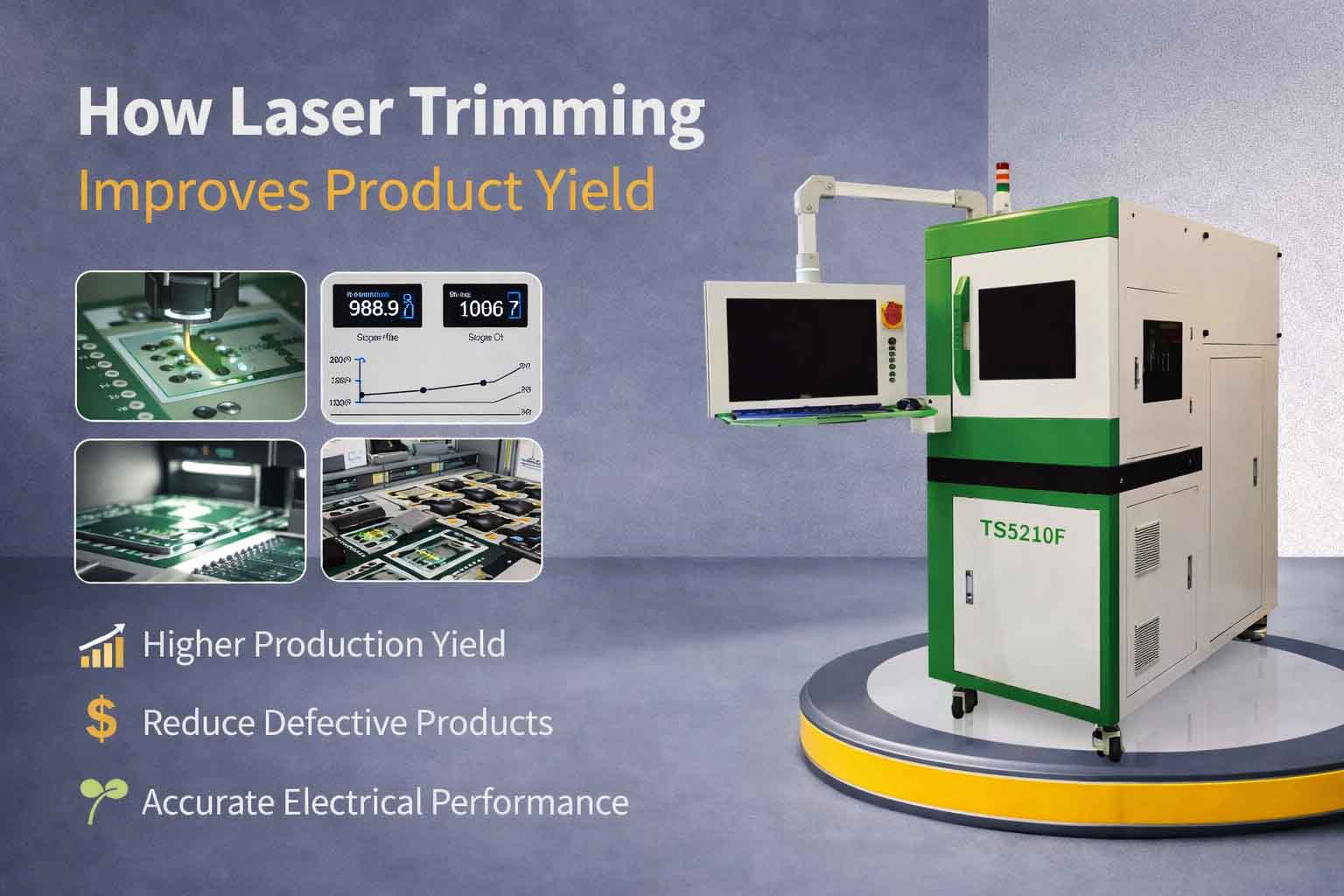
- Higher Production Yield: Directly improves pass rates
- Lower Manufacturing Costs: Reduces material waste
- Enhanced Product Performance: Accurate calibration improves reliability
- Automation Integration: Supports smart manufacturing systems
With laser trimming yield improvement, manufacturers can achieve both cost efficiency and high-quality output.
Applications in Electronics Manufacturing
Laser trimming is widely used in:
- Automotive Electronics: Sensor calibration and control modules
- Medical Devices: High-precision signal adjustment
- Consumer Electronics: Circuit fine-tuning
- Industrial Equipment: Reliable analog circuit performance
In all these fields, laser trimming yield improvement plays a crucial role in maintaining high production standards.
Why Choose a Laser Trimming Machine?
Compared with traditional trimming methods, a resistor trimming machine provides:
- Faster processing speed
- Higher precision and stability
- Lower labor dependency
- Better scalability for mass production
For companies looking to improve efficiency and reduce waste, investing in laser trimming technology is a strategic move.
How to Maximize Laser Trimming Yield Improvement
To fully leverage laser trimming yield improvement, manufacturers should:
- Select high-quality laser trimming equipment
- Optimize trimming parameters for specific materials
- Integrate automated testing systems
- Train operators for system efficiency
These steps ensure consistent performance and long-term production benefits.
Conclusion
Laser trimming yield improvement is a powerful approach for enhancing manufacturing efficiency and product quality. By using advanced resistor trimming machines, businesses can reduce defects, improve consistency, and maximize profitability.
As competition in the electronics industry continues to grow, adopting laser trimming technology is no longer optional—it is essential for achieving higher yields and maintaining a strong market position.